
Indian Oil Corporation's (IOC's) Q2FY26 operating profit of 14,600 crore beat Street estimates and was up 16 per cent on a sequential basis. It surged 287 per cent over the year-ago quarter on account of an improved refining performance.

Reliance Jio, India's biggest telecom operator, is planning to launch an initial public offering (IPO) and listing on bourses in the first half of 2026, billionaire Mukesh Ambani said on Friday. Jio is currently a unit of Reliance Industries Ltd, India's most valuable company.

Uncertainties over the impact of the United States' (US') tariffs on India, along with the ongoing transmission of past rate cuts, prompted the members of the Reserve Bank of India's Monetary Policy Committee (MPC) to maintain the status quo during the August meeting, the minutes showed. While some of the external members highlighted their concern over growth, the internal members cited the one-year headline inflation rate overshooting the 4 per cent target.

Eternal, the parent company of Zomato and Blinkit, on Wednesday reported a 72.8 per cent jump in its net profit for the third quarter of financial year 2026 (Q3FY26), on the back of a robust momentum in its quick commerce business. The firm's net profit rose to Rs 102 crore in Q3FY26 against Rs 59 crore it reported during the same period a year ago.

The Indian economy recorded a six-quarter high growth of 8.2 per cent in July-September, as factories churned out more products in anticipation of a consumption boost from the GST rate cut, according to government data.

Growth accelerated for Zomato operator Eternal in the second quarter of financial year 2026 (Q2FY26). Zomato's business to commerce (B2C) operations delivered a strong 57 per cent year-on-year (Y-o-Y) rise in net order value (NOV) to Rs 23,164 crore while consolidated revenue soared 183 per cent Y-o-Y (90 per cent Q-o-Q) to Rs 13,590 crore during the period, with like-for-like (LFL) growth of 65 per cent, and acceleration in the quick commerce (QC) segment, which recorded NOV growth of 137 per cent Y-o-Y (27 per cent Q-o-Q).

Hit by a slowdown in information technology (IT) hiring, Info Edge (India)'s results for the July-September quarter (Q2) of 2025-26 (FY26) fell short of brokerage expectations. What helped the online recruitment major offset the weak IT hiring trend was broad-based growth across other sectors.

Vedanta, a conglomerate in mining and metals, has seen a surge in its share price on the back of multiple triggers. Its demerger appears to be on track, a strong non-ferrous commodity cycle is boosting margins, and silver bulls are interested in Hindustan Zinc, its subsidiary.

'This marks a turning point for Paytm, with the regulatory environment looking much clearer than it has been in the last two years.'

Axis Bank reported a sharp drop in net profit in the second quarter of financial year 2026 (Q2FY26) on higher provisions and weak operating profit growth while revenue growth was moderate. But loan growth and deposit growth improved to double-digits year-on-year (Y-o-Y) and asset quality also improved with the gross non-performing loan or NPL ratio moving down.

The Reserve Bank on Wednesday revised upward its growth estimates for the current fiscal year to 6.8 per cent and lowered its inflation projection to 2.6 per cent based on an above-normal monsoon and the rationalisation of GST rates.

The Indian steel industry is faced with a paradox: Rising demand and falling prices. Demand continues to surge as user industries gather pace, with the World Steel Association projecting around 9 per cent annual growth for India over 2025 and 2026, the year domestic demand is projected to be almost 75 million tonnes (mt) higher than in 2020.

'The kind of reach it has with so many bank branches even in the remotest part of the country, it is one channel which will play a very important role in vision of insurance for all.'

The exit of Larsen & Toubro (L&T) from the Hyderabad Metro is a long-term positive for the stock. It could be a bullish trigger, alongside higher international orders, and new opportunities in segments like defence and data centres.

The Adani Group reported its highest-ever trailing twelve-month EBITDA of Rs 90,572 crore, driven by strong performance in its core infrastructure and clean energy businesses, along with contributions from its emerging airports segment, the conglomerate said on Thursday. The group reported an earnings before interest, taxes, depreciation and amortization (EBITDA) of Rs 90,572 crore for the period from July 2024 to June 2025, up from Rs 85,502 crore pre-tax profit in the trailing twelve months ending June 2024, it said in a statement.

After a subdued first quarter of 2025-26 (Q1FY26), banks are now betting big on the festive season, rolling out attractive loan offers to boost credit growth in the second half of the current financial year (H2FY26) - a trend likely to be further accentuated by the second-order effects of the good services tax (GST) cuts.

Reliance Industries Ltd (RIL) on Friday reported a 9.6 per cent year-on-year rise in net profit for the September quarter, driven by strong performance in its consumer-facing retail and telecom businesses and a recovery in its core oil-to-chemicals segment.

India's consumer price index (CPI)-based retail inflation rate is likely to have cooled further in June, thus remaining below the 4 per cent target of the Reserve Bank of India (RBI) for a fifth consecutive month, giving the central bank wiggle room to focus on growth. Economists reckon that the decline is on account of easing prices in various categories of goods, especially food items, and a favourable base effect.

India's industrial production growth slowed to a nine-month low of 1.2 per cent in May 2025 due to poor performance of manufacturing, mining and power sectors caused by the early onset of monsoon, according to official data released on mMonday. The factory output, measured in terms of the Index of Industrial Production (IIP), had expanded by 6.3 per cent in May 2024.

India posted a current account surplus of $13.5 billion or 1.3 per cent of GDP in March quarter 2024-25 as compared with $4.6 billion in the year-ago period mainly on account of surge in services exports and higher remittances, according to RBI data released on Friday.

Retail inflation eased to a nearly six-year low of 3.16 per cent in April mainly due to subdued prices of vegetables, fruits, pulses, and other protein-rich items, creating enough room for the Reserve Bank to go for another round of rate cut in the June monetary policy review. The Consumer Price Index (CPI) based inflation was 3.34 per cent in March and 4.83 per cent in April 2024. It was 3.15 per cent in July 2019.

India's flexible (flex) office segment, having breached pre-pandemic levels, is thriving as corporates, startups, multinational corporations, and global capability centres (GCCs) expand in India, seeking low-capital yet Grade A plug-and-play facilities. In the first quarter (Q1) of 2025, the flex office segment continued to grow, with flex space leasing rising by 22 per cent to 2.2 million square feet (msf), according to Colliers.

For food aggregator platform Swiggy, quick commerce (qcom) is proving to be a better growth opportunity than food delivery. Its qcom arm Instamart is rapidly outpacing its core food delivery vertical across several key financial metrics, the company's recently filed draft red herring prospectus (DRHP) shows.

After a massive selloff in the shares of food delivery giants Zomato and Swiggy, analysts believe the time may be right for investors to start adding these stocks to their portfolio carts. Their optimism, they say, stems from the sharp correction in stock prices and valuations, which seem to have "over-baked" concerns about the two companies.
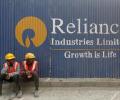
Weighed down by the oil-to-chemicals (O2C) business, Reliance Industries (RIL) results for the April-June quarter (Q1) of 2024-25 (FY25) missed Street estimates. A 14 per cent fall in the O2C segment's operating profit compared to the year-ago quarter and a 22 per cent sequential decline pulled down the consolidated performance. The O2C segment accounts for a third of the overall operating profit and about 60 per cent of the attributable consolidated profit.

In previews of Q2FY25 and beyond, industry analysts are expecting a turnaround for IT services. High teens earnings per share or EPS growth is expected for the next two-three financial years. The hopes are backed by deal wins of above $100 billion as at Q1FY25, up 16.6 per cent year-on-year ( Y-o-Y).

'It is not just the US and European opportunity, but it is a huge global opportunity.'

Automotive (auto) major Mahindra & Mahindra (M&M), which is readying to launch nine sport utility vehicles (internal combustion engine/ICE), seven Born Electric Vehicles (BEVs), and seven light commercial vehicles by 2030, has outlined an investment of Rs 27,000 crore in its auto business between 2024-25 (FY25) and 2026-27 (FY27). Over the next three years, the company will deploy Rs 37,000 crore, including its auto business, farm business (Rs 5,000 crore), and service business (Rs 5,000 crore).

After disappointing guidances in the first quarter (Apr-Jun) of the 2023-24 financial year (Q1FY24) and valuation downgrades, the Indian IT sector could see some positive repricing as the bad news for IT maybe easing in Q2FY24. A key negative factor was weaker demand from the US financial sector and from North America in general. The latest GDP (gross domestic product) estimates and sector-specific news suggest that the demand situation may not be quite so bad with a gradual recovery in tech spending in Q2.

The decline of over 5 per cent in PB Fintech's shares (the parent company of PolicyBazaar) in the past two days presents an opportunity for long-term investors to consider buying the stock, suggest analysts. By comparison, the benchmark S&P BSE Sensex has remained flat during the same period with a negligible gain of 40 points, or 0.06 per cent. Analysts believe that the recent selling is "overdone", as the company behind the online insurance portal remains committed to achieving profitability, and the potential threat from the government's online insurance portal, Bima Sugam, might be embellished.

The Reserve Bank's growth projection for next financial year is lower than 8-8.5 per cent projected by the finance ministry in the recent Economic Survey which was tabled in Parliament on January 31. Unveiling the bi-monthly policy, RBI governor Shaktikanta Das said, "Recovery in domestic economic activity is yet to be broad-based, as private consumption and contact-intensive services remain below pre-pandemic levels."

FY22 will be the year to rebuild with the IMF projecting output growth at 11.5 per cent, economic survey at 11.0 per cent and the RBI's Monetary Policy Committee at 10.5 per cent.

Expect a more modest out-turn of around 5 per cent (if not less) because of the longer-term scarring effects of the Covid shock, the sharply slowing growth in the pre-Covid years and some scepticism about the growth-efficacy of some of recent official policy initiatives, explains Shankar Acharya, former chief economic advisor to the government.
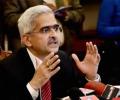
The Reserve Bank of India on Friday decided to leave benchmark interest rate unchanged at 4 per cent but maintained an accommodative stance as the economy faces heat of the second Covid wave.

Omkeshwar Singh, Head, Rank MF, a mutual fund investment platform, answers your queries.
